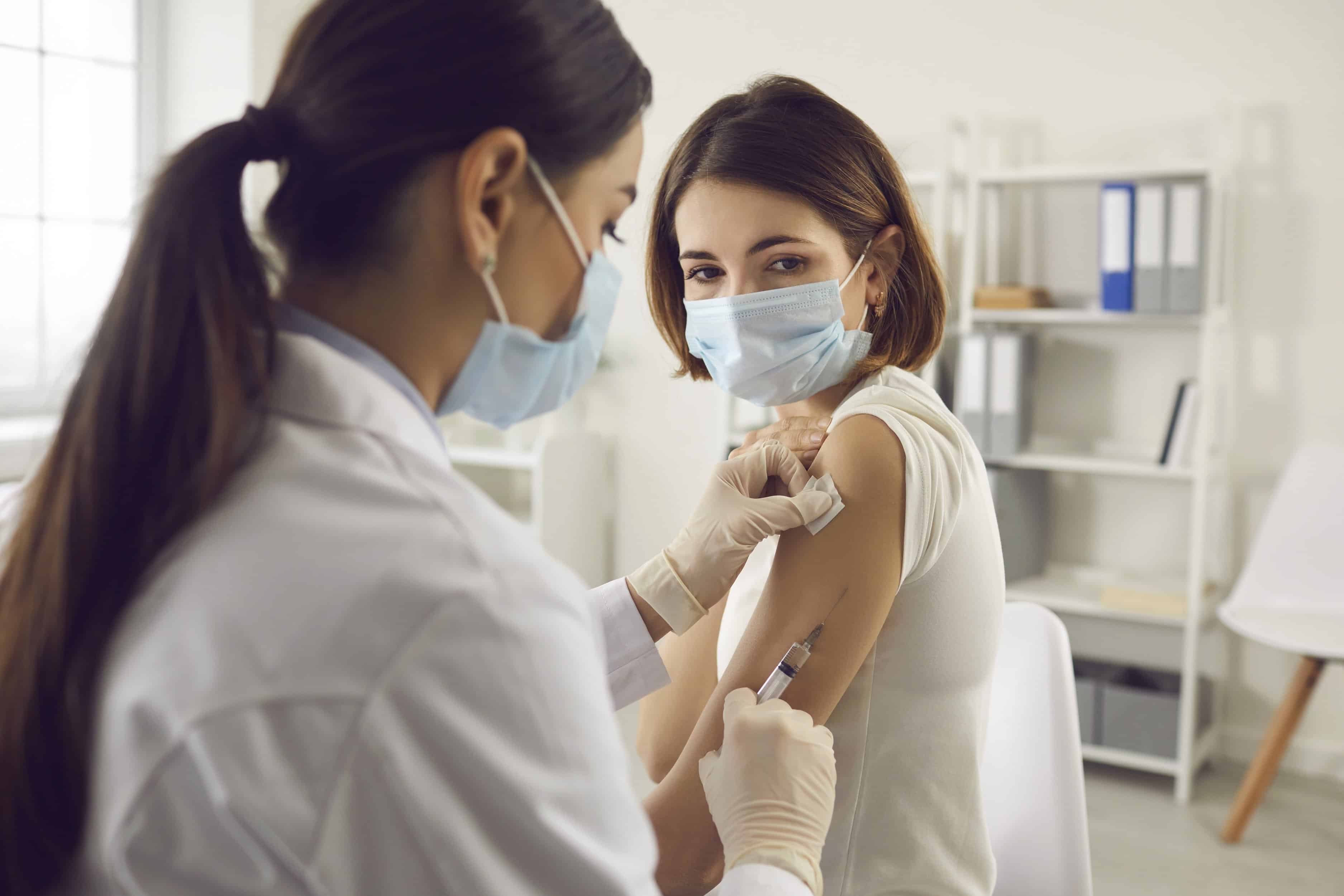
Getting adequate sleep—not less than six hours per night—around the time or day of vaccination may improve the body’s response to vaccination, according to a new study.
The study was published in the journal Current Biology and it showed that those who slept less than six hours every night generated significantly fewer antibodies than those who got sufficient sleep that exceeded seven hours.
According to the study authors, good sleep is beneficial to the body’s immune system and works to increase and prolong the vaccine’s protection.
Previous studies have looked at the role of insufficient sleep duration in people’s various responses to vaccination but have arrived at mixed results. Hence the need for this study.
The study was conducted by researchers at the University of Chicago and the French National Institute of Health, and they found a strong link between insufficient sleep and vaccine response. Although, after analyzing both men and women separately, they found that the link was stronger for men but not for women.
The researchers suggested that this was possibly caused by the wide fluctuations in females’ sex hormones or the women’s use of contraceptives.
They arrived at these conclusions after scanning databases for studies that examined the link between sleep duration and vaccine response. They eventually focused on the results of seven studies that vaccinated for influenza and hepatitis A & B.
The team grouped the participants’ sleep duration into three categories: short, intermediate, and normal. They measured and compared the response to vaccination for those who slept less than six hours with those who slept the normal amount—seven to nine hours.
The team also checked for possible differences between men and women as well as adults below and above the age of 65.
There, they found that adults between ages 18 and 60 with insufficient sleep had a decreased response to vaccination compared with those over the age of 65. This finding wasn’t in any way surprising to the study authors, as they note that older adults are known to tend to sleep less.
While most studies measured sleep duration either through motion-detecting wristwatches or in a sleep lab, others relied on reports from the participants on how long they slept. The team observed in these studies that short sleep duration was linked to a lowered body response to vaccination. However, the effect was stronger for studies that assessed sleep by objective methods. Chances are, people could have most likely provided wrong estimates of the number of hours of sleep they have had.
Regardless, the researchers see the need for more studies on this link between sleep and vaccination. “We need to understand the sex differences, which days around the time of vaccination are most important, and exactly how much sleep is needed so that we can give guidance to people,” says Karine Spiegel who is the lead study author.
“We are going to be vaccinating millions and millions of people in the next few years, and this is an aspect that can help maximize protection.”